
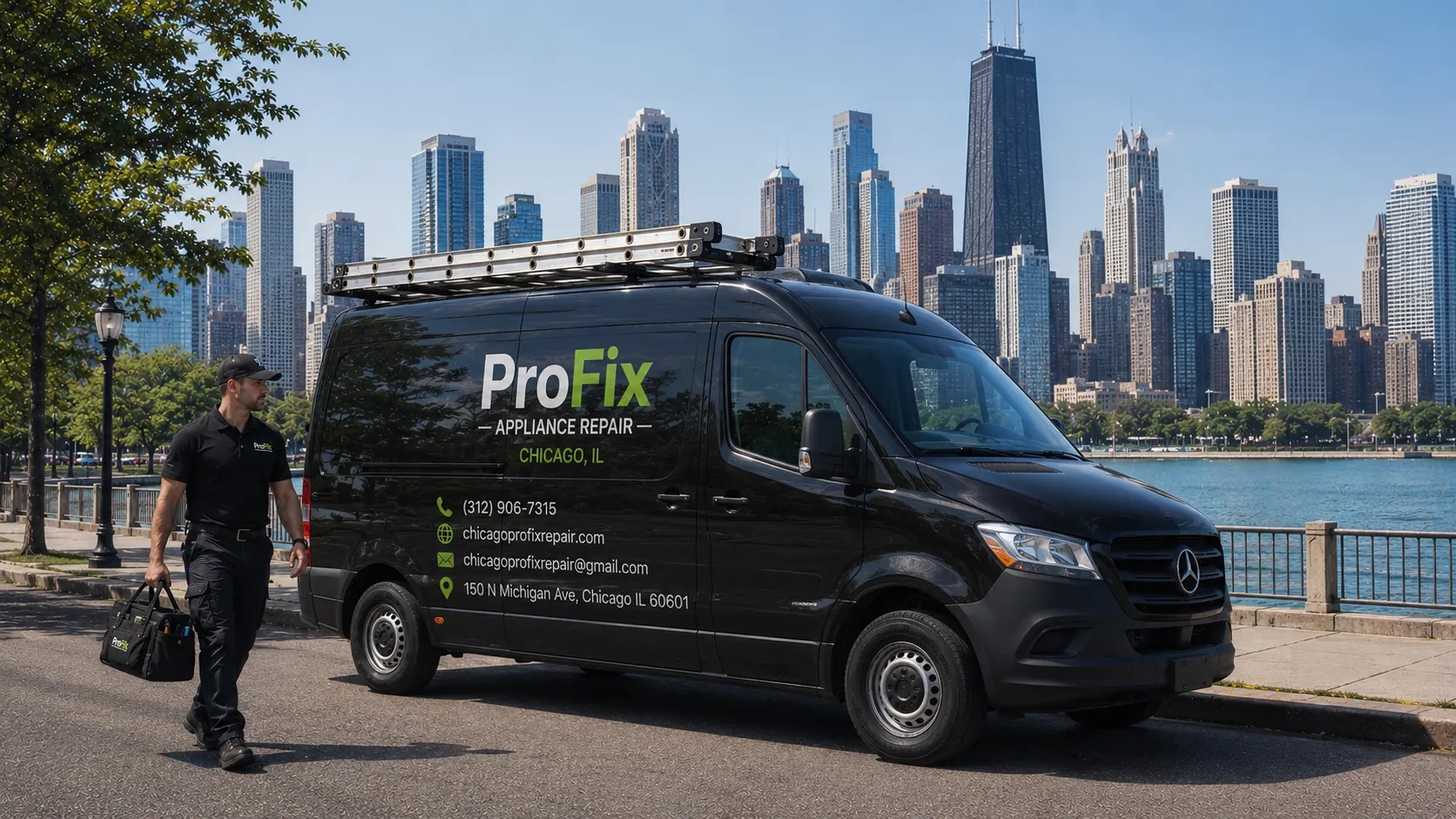

Atosa Certified — Arlington Heights, Rolling Meadows & Mount Prospect
Atosa Repair Near Me in Arlington Heights, Rolling Meadows & Mount Prospect, Cook County, IL
Local Atosa appliance repair near you in Arlington Heights, Rolling Meadows & Mount Prospect — certified neighborhood technicians, genuine OEM parts, same-day availability across Cook County.
Mon–Sat 7am–8pm · Sun 9am–5pm
Schedule Your Repair
Service Type
What type of service do you need?
Or call us directly:
(312) 906-7315Atosa Appliances We Repair in Arlington Heights, Rolling Meadows & Mount Prospect
Atosa: engineering and what it means for repair
Atosa has been building appliances since 2000, originating in China, and sits in the commercial segment of the market. The defining engineering choice is commercial refrigeration and cooking for foodservice at accessible price points — and that choice is not cosmetic. It determines which components in a Atosa carry the load, which failures recur, and which diagnostic sequence finds the fault rather than replacing parts until the symptom disappears. In Cook County, where the gap between long-held bungalow appliances and near-new condo installs is unusually wide, so two machines of the same model year arrive in very different condition, that distinction decides whether a Atosa is worth keeping.
If there is one service note that separates a good Atosa outcome from an expensive one, it is that Atosa is commercial equipment, so service intervals and duty expectations differ entirely from domestic appliances. Generalists who skip that step misread this equipment at a rate the underlying reliability does not explain, and the bill absorbs the difference. In Cook County the penalty compounds: parts move through Chicago-area distribution with same-day will-call on common stock, so a part fitted on a guess costs a return trip as well as the money.
In practice that means we approach Atosa equipment with a specific order of checks rather than a generic one. Building around commercial refrigeration and cooking for foodservice at accessible price points changes what a noise, a temperature drift or an intermittent electrical fault most likely indicates, and starting from the brand's actual architecture is faster and cheaper than starting from the symptom alone. In Chicago we add one more input before touching anything: two-flat and bungalow panels were sized before dishwashers and induction cooking, and condo towers add house-panel limits an individual owner cannot do anything about.
Continuous duty and why domestic assumptions do not transfer
Commercial equipment is engineered for a completely different duty cycle: hundreds of cycles a day, continuous refrigeration, and operation in hot, humid, high-traffic environments. Applying domestic diagnostic assumptions to it produces wrong answers, and applying domestic service intervals to it produces failures.
The dominant failure driver is duty rather than age. Door gaskets, condenser coils, pumps and fan motors all wear on a schedule set by how hard the equipment works, which means a two-year-old commercial machine in a busy kitchen can need more attention than a ten-year-old domestic one. Preventive scheduling is not optional at this level; it is the difference between planned maintenance and a closed kitchen.
Downtime economics change everything about how these jobs are prioritised. A failed reach-in or ice machine costs a business revenue every hour it is out, so we carry the common commercial failure parts, work around service hours where we can, and are explicit about what can be got running today versus what needs a scheduled return.
Health-code and gas-safety requirements also apply to commercial installations in ways they do not domestically, and work has to be done and documented accordingly.
Atosa in Chicago homes
Chicago is a specific operating environment, and Atosa equipment meets it in specific ways. For Atosa equipment here the dominant local stressor is brutal winters and wide seasonal temperature swings, with unheated garages and basement laundry rooms swinging across a 100°F annual range. Manufacturers write Atosa service guidance for average conditions; Chicago is not average, and commercial equipment running continuous duty feels it faster than domestic machines do.
For Atosa the housing matters as much as the climate. Cook County is a mix of pre-war brick two-flats and bungalows alongside high-rise condo stock, where freight-elevator scheduling and tight galley kitchens shape every visit — which is the environment every Atosa appliance here operates in. For Atosa specifically, that intersects with condenser fan motors and door gaskets under heavy duty cycles — the physical installation determines both how quickly that failure develops and whether it can be repaired in place when it does.
The third variable is the water supply. Chicago runs Lake Michigan supply in the city and mineral-heavy well sources across parts of the suburbs, and it arrives at Atosa inlet valves, spray arms and every other wetted component exactly as supplied — the appliance does nothing to condition it. The freeze–thaw cycle stresses water lines and ice makers hardest between December and March, and high-rise pressure swings add a second variable the suburbs do not have. Atosa equipment tracks that calendar closely.
Where Atosa equipment actually fails
Look at enough Atosa equipment in Chicago and the same faults keep surfacing: condenser fan motors and door gaskets under heavy duty cycles. That list belongs to this brand rather than to appliances generally, and knowing it before a panel comes off accounts for most of the diagnosis.
Our Atosa coverage runs across refrigerator, freezer, ice-maker and everything else in the range. Sharing a badge does not mean sharing a fault pattern — refrigeration and laundry diverge almost immediately once you are past the parts catalogue, and treating them as one category is how visits get wasted. What we actually see across Cook County is shaped by the housing as much as the brand: the gap between long-held bungalow appliances and near-new condo installs is unusually wide, so two machines of the same model year arrive in very different condition.
On Atosa we treat "the electronics have failed" as a hypothesis rather than a conclusion. Drain height, vent length, ventilation clearance and circuit capacity all produce faults that look electronic, and all four are cheaper to correct than the board they would otherwise condemn. In Chicago housing a fifth belongs on the list, because freight-elevator windows and reserved loading docks decide when a high-rise job can actually happen, and a missed window costs a day rather than an hour.
Cook County adds its own layer to any Atosa service history. Because the governing stressor here is brutal winters and wide seasonal temperature swings, the components in its path age faster than Atosa designed for, compressing an eight-year failure into something closer to five.
What to expect on Atosa parts and warranty
Parts availability for Atosa is a real factor in the repair decision: commercial supply channel, generally good. We confirm Atosa availability before quoting rather than after, because a diagnosis you cannot act on is worth nothing, and on commercial equipment the difference between a stocked part and a special order is the difference between one visit and three weeks. Locally, parts move through Chicago-area distribution with same-day will-call on common stock, which is why we check stock against your model number rather than the brand alone.
Our warranty on Atosa work is 90 days parts, 30 days labour, identical to every other brand we handle. If your unit is still covered by Atosa's own warranty we will say so and send you there instead, because doing the work ourselves would cost you the coverage you already paid for.
Discontinued Atosa components get a straight answer rather than a workaround — we would rather price the job honestly against replacement than install a near-enough part that fails in a new way before the year is out. On this brand the limiting factor is normally cost rather than availability, which is not true of every badge we handle. Locally there is a second consideration: the gap between long-held bungalow appliances and near-new condo installs is unusually wide, so two machines of the same model year arrive in very different condition.
Atosa service runs across Lakeview, Evanston, Oak Park and Schaumburg and everywhere else in Cook County. Book before noon and same-day is usually available, and there is no distance charge anywhere inside the county line.
Atosa maintenance that actually matters here
Most of what shortens Atosa service life in Chicago is preventable, and almost none of it is covered in the manual, because the manual is written for average conditions rather than for brutal winters and wide seasonal temperature swings. The highest-return maintenance item on Atosa is keeping condenser and heat-exchange surfaces clear: restricted airflow makes the compressor or element work harder continuously, and continuous overwork is what turns a ten-year appliance into a six-year one.
The second factor is the supply itself. Lake Michigan supply in the city and mineral-heavy well sources across parts of the suburbs reaches every water-fed Atosa component untreated, and the result is gradual scaling of inlet screens, spray arms and fill valves rather than a clean failure. What owners notice first is performance quietly falling away — cycles running longer, results getting poorer, ice slowing — which is easy to live with and therefore easy to leave, and the mineral build-up is usually well established before anyone calls. Descaling a Atosa on a schedule is far cheaper than the repair it heads off.
The third driver is how the machine was fitted — for Atosa in Cook County, a genuine cause of failure rather than a technicality. A mix of pre-war brick two-flats and bungalows alongside high-rise condo stock, where freight-elevator scheduling and tight galley kitchens shape every visit, which routinely puts clearances, drain heights and vent runs outside what the appliance expects before it is ever switched on. Those conditions stay silent for years and then present as a component fault, and replacing that component without correcting the installation simply restarts the clock.
If you own Atosa equipment here and want one piece of advice: have the failure points specific to the brand — condenser fan motors and door gaskets under heavy duty cycles — checked before they fail rather than after. On commercial equipment that inspection costs far less than the emergency call it avoids, and it is the difference between a scheduled repair and a ruined weekend — a bigger gap in Cook County than most places, because freight-elevator windows and reserved loading docks decide when a high-rise job can actually happen, and a missed window costs a day rather than an hour.
Atosa in Arlington Heights, Rolling Meadows & Mount Prospect — Service Snapshot
Based on ProFix Atosa service calls across Cook County over the last 12 months.
Other Brands We Service in Arlington Heights, Rolling Meadows & Mount Prospect















































Built for Chicago — Homes, Condos & More
ProFix Appliance Repair Chicago is Arlington Heights, Rolling Meadows & Mount Prospect's trusted source for local Atosa appliance repair. Our neighborhood technicians are specifically trained on Atosa models and carry genuine OEM replacement parts, so most Arlington Heights, Rolling Meadows & Mount Prospect Atosa repairs are diagnosed and fixed in a single visit — backed by a 90-day parts and 30-day labor warranty.
How It Works
Available Now · Chicago, IL
Ready to schedule your repair?
ProFix Appliance Repair Chicago — trusted by thousands of Chicago homeowners. Same-day slots available.
Atosa Appliance Repair in Arlington Heights, Rolling Meadows & Mount Prospect — Common Questions
Can't find your answer? Book a service call or call us now.
Still have questions?
Our Chicago team is ready — same-day service across Cook County.