

Expert Repair
Hotpoint Washer Repair Near Me in Lincolnwood, Niles & Morton Grove, Cook County, IL
Local Hotpoint technicians near you in Lincolnwood, Niles & Morton Grove, Cook County — we diagnose and fix your Washer fast, usually same day.
Mon–Sat 7am–8pm · Sun 9am–5pm
Schedule Your Repair
Service Type
What type of service do you need?
Or call us directly:
(312) 906-7315Washer Brands We Repair


















Built for Chicago — Homes, Condos & More
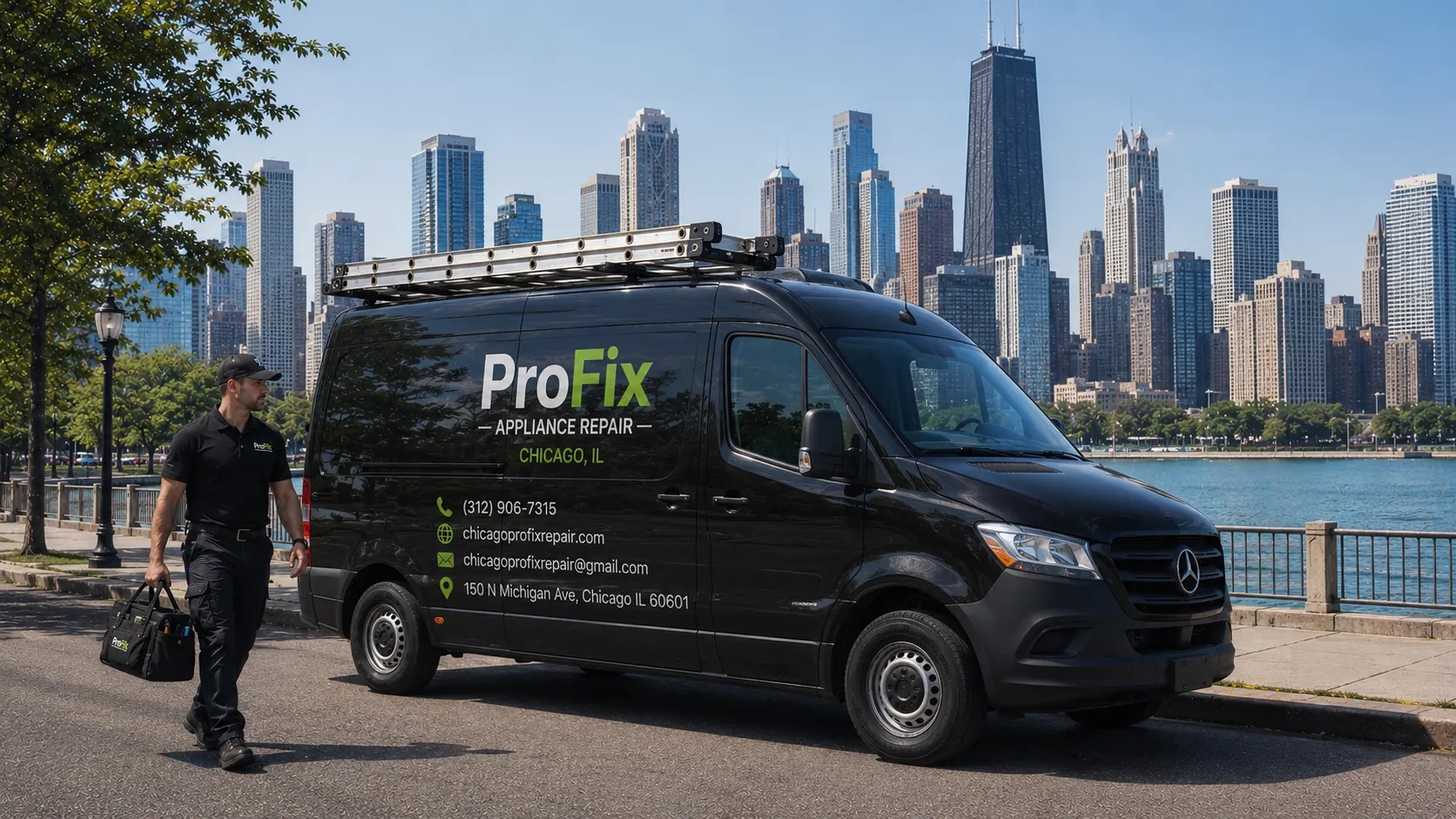
ProFix Appliance Repair Chicago provides local Hotpoint Washer repair in Lincolnwood, Niles & Morton Grove, IL. Our neighborhood technicians are factory-trained to service Hotpoint appliances and carry genuine OEM parts to complete most repairs in a single visit. Whether your washer needs attention or has another issue, we're already in your Lincolnwood, Niles & Morton Grove neighborhood. We cover zip codes 60712, 60714, 60053 and all surrounding areas.
How It Works
Available Now · Chicago, IL
Ready to schedule your repair?
ProFix Appliance Repair Chicago — trusted by thousands of Chicago homeowners. Same-day slots available.
About Hotpoint Washer Repair
Hotpoint washer repair starts with what this brand actually does differently: GE-owned budget line. On washers specifically the recurring faults are drain pumps blocked by debris,door boot seals harbouring mould, and in Chicago they arrive earlier than the 10-13 years design life suggests because of brutal winters and wide seasonal temperature swings. A washer that will not drain is more often a drain hose at the wrong standpipe height than a failed pump — installation before component — which is why we check that before ordering anything.
In practice we work a Hotpoint washer from its architecture inward. The commitment to GE-owned budget line determines which parts are under load at the moment a symptom shows, and that rarely matches the generic fault tree for washers. Testing in the brand's own order is what keeps a good component from being replaced on a guess.
A Hotpoint washer in Cook County works against conditions its design brief did not include: brutal winters and wide seasonal temperature swings, with unheated garages and basement laundry rooms swinging across a 100°F annual range, with a supply of Lake Michigan supply in the city and mineral-heavy well sources across parts of the suburbs. The freeze–thaw cycle stresses water lines and ice makers hardest between December and March, and high-rise pressure swings add a second variable the suburbs do not have. That combination is why local washer failures cluster earlier than the 10-13 years service life would predict.
A Hotpoint washer is only as good as the space it was put into, and locally that space is often the constraint: Cook County is a mix of pre-war brick two-flats and bungalows alongside high-rise condo stock, where freight-elevator scheduling and tight galley kitchens shape every visit. Drain height, vent run, clearance and available circuit are set by the building, not the appliance. On top of that, freight-elevator windows and reserved loading docks decide when a high-rise job can actually happen, and a missed window costs a day rather than an hour, which shapes how the visit is scheduled.
On parts, available but thinning on older units. Locally, parts move through Chicago-area distribution with same-day will-call on common stock, so we confirm availability against your model and serial before quoting rather than after. The preventive step worth taking on a Hotpoint washer is narrow — leave a front-loader door ajar between cycles — and it costs nothing but attention. On the economics: supply hose failure is the most expensive thing a washer does, and it has nothing to do with the machine working
Service covers Lakeview, Evanston, Oak Park and Schaumburg and everywhere else in Cook County. Morning bookings generally get a same-day slot on a Hotpoint washer, there is no distance surcharge inside the county, and the finished repair is warranted 90 days on parts with 30 on labour. Equipment still under manufacturer warranty gets pointed back to that channel.
Why Lincolnwood, Niles & Morton Grove Homes Need Local Expertise
The freeze-thaw cycle that defines a Midwest winter stresses water inlet valves, hoses, and fittings throughout Lincolnwood, Niles & Morton Grove in a way warmer climates never see, and we replace far more cracked hoses and valves here each spring than almost any other repair.
Chicago winters routinely drop well below freezing for weeks at a time across Lincolnwood, Niles & Morton Grove, and that sustained cold is hard on any appliance with exposed water lines — a frozen or burst ice maker line is one of our most common cold-weather calls here.
Humidity swings between a bone-dry winter and a humid Midwest summer stress rubber door gaskets and seals more than a climate with steadier year-round humidity, so gaskets throughout Lincolnwood, Niles & Morton Grove often need replacement a couple years sooner than the manufacturer's typical estimate.
Single-family and low-rise housing dominates much of Lincolnwood, Niles & Morton Grove, which means most calls here are straightforward driveway-and-garage visits, though older homes still require care around dated wiring and plumbing.
Garage-adjacent laundry and second-refrigerator setups are common in Lincolnwood, Niles & Morton Grove, and an unheated garage that swings from well below freezing in January to 90-plus degrees in July puts real stress on compressors and seals.
The building stock across Lincolnwood, Niles & Morton Grove spans everything from century-old bungalows to brand-new construction, which shifts many of our calls between sourcing parts for a decades-old unit and diagnosing a builder-installed appliance barely a year old.
Winter storm preparation shapes a lot of what we see in Lincolnwood, Niles & Morton Grove each fall — customers asking about surge protection, or wanting a full appliance check before an unheated garage or basement freezer gets stressed by January temperatures.
Word of mouth travels fast within tight-knit Chicago-area neighborhoods, and a large share of our new customers in Lincolnwood, Niles & Morton Grove come from a next-door neighbor or a building's resident group chat rather than an online search.
Common Hotpoint Washer Issues We Fix
Lincolnwood, Niles & Morton Grove Zip Codes We Cover for Hotpoint Washer Repair
Other Washer Brands in Lincolnwood, Niles & Morton Grove